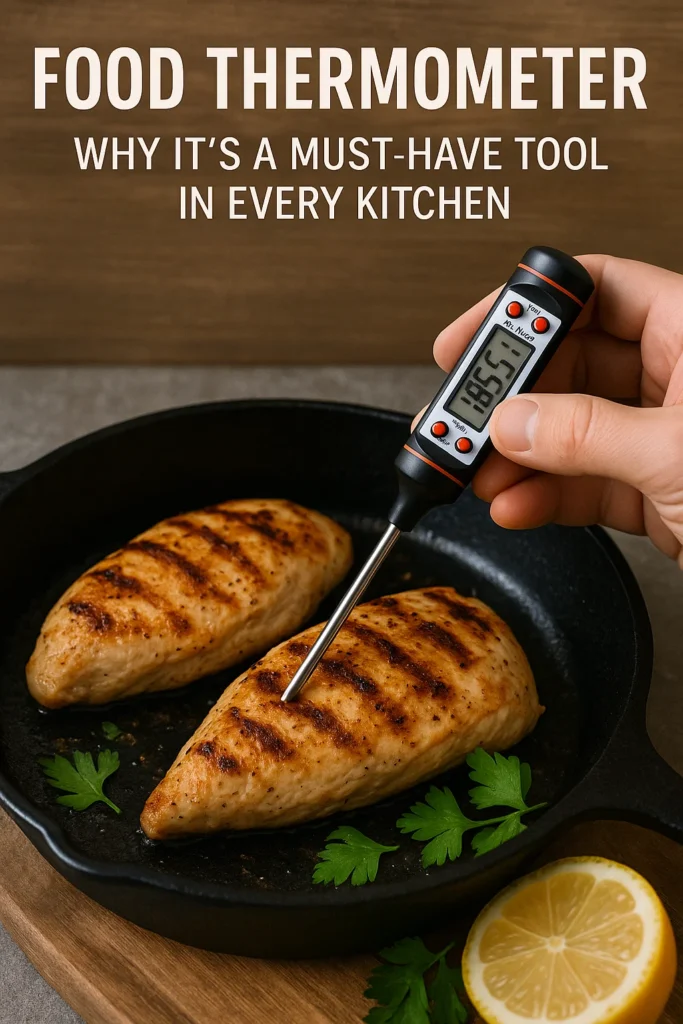
Adding ingredients, turning on the burner, and waiting is how cooking appears to be easy. However, a tiny error might ruin the entire meal. A food thermometer can help with that. Although it’s a tiny tool, I can assure you that it has a significant impact. A food thermometer can preserve both your food and your health when you cook meat, bake cakes, or even fry snacks.
What Is a Food Thermometer?
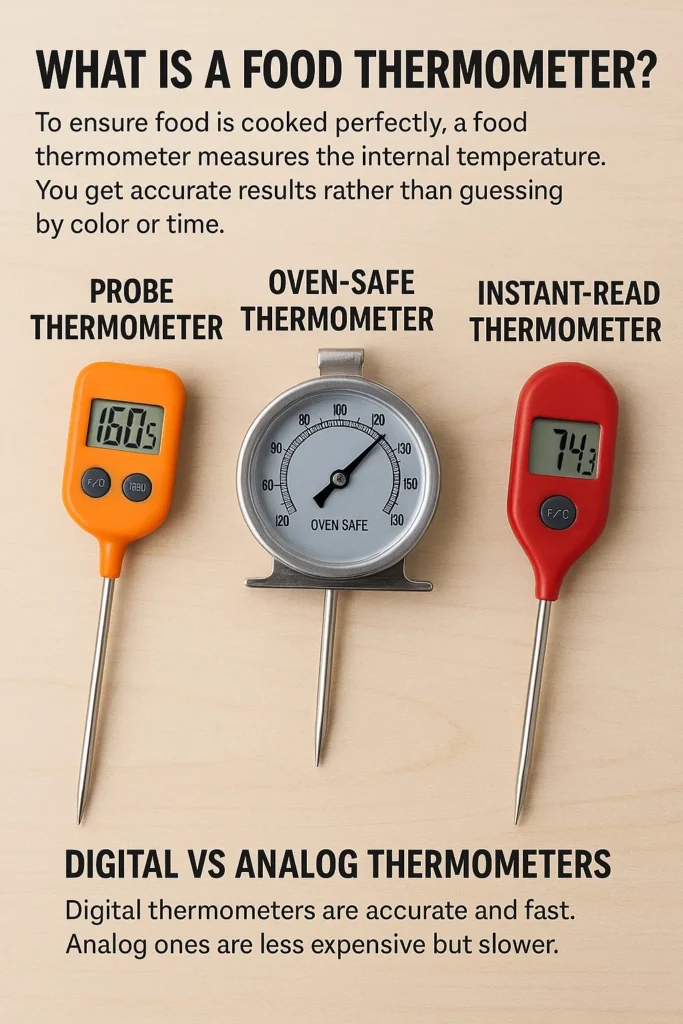
To ensure that food is prepared perfectly, a food thermometer detects its internal temperature. You get precise findings rather than speculating based on color or time.
Types of Food Thermometers
Probe thermometers, oven-safe thermometers, and instant-read thermometers are available. While each has a specific purpose, instant-read digital thermometers are the most often used in residential kitchens.
Digital vs Analog Thermometers
Digital thermometers are precise and quick. Although slower, analog ones are less expensive. For me, digital is better, as it provides results in a matter of seconds.
Why Food Temperature Matters in Cooking
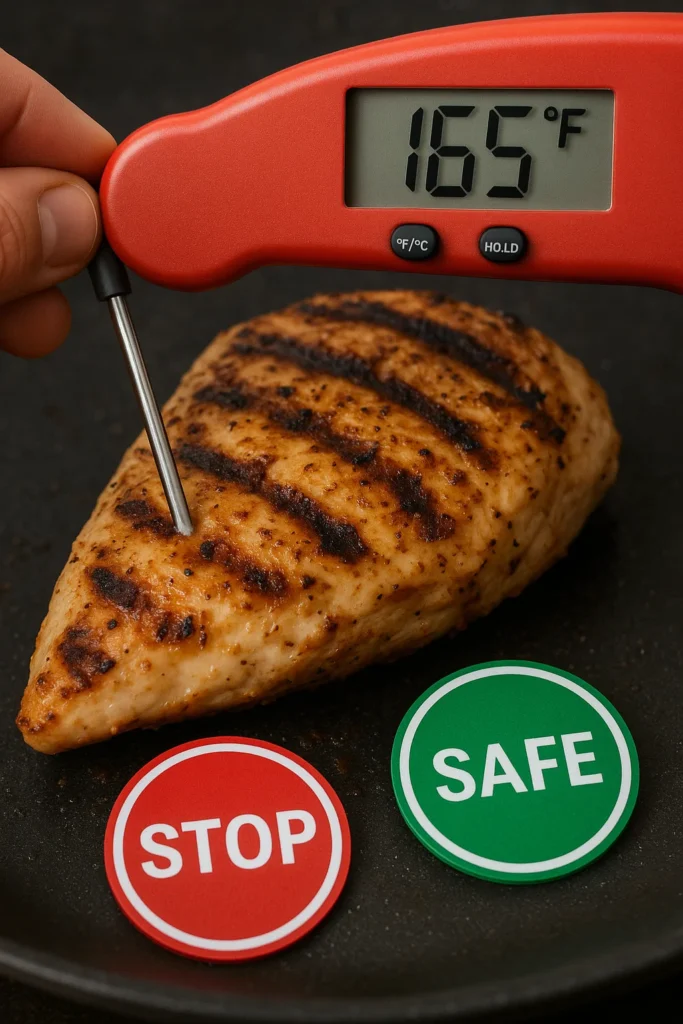
While overdone food turns tasteless and dry, undercooked food might result in food illness. The key to striking a balance between taste and safety is temperature. Consider it similar to traffic signals, where red indicates stop and green indicates safe.
Personal Experience: How a Food Thermometer Changed My Cooking
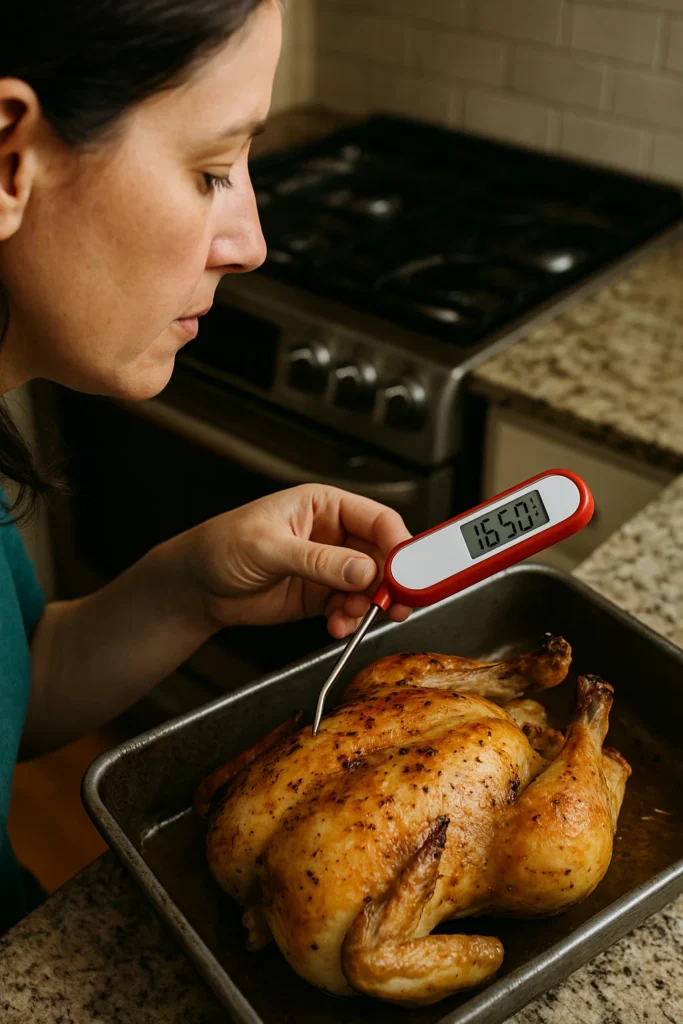
Prior to utilizing a food thermometer, I had to make educated guesses. My chicken was either a little raw around the bone or overly dry. When I made the decision to use a thermometer one day, everything changed. My roast chicken was safe, delicious, and cooked to perfection. I’ve never cooked meat without checking the temperature since. I felt more confident, especially while preparing meals for the family.
Common Uses of a Food Thermometer
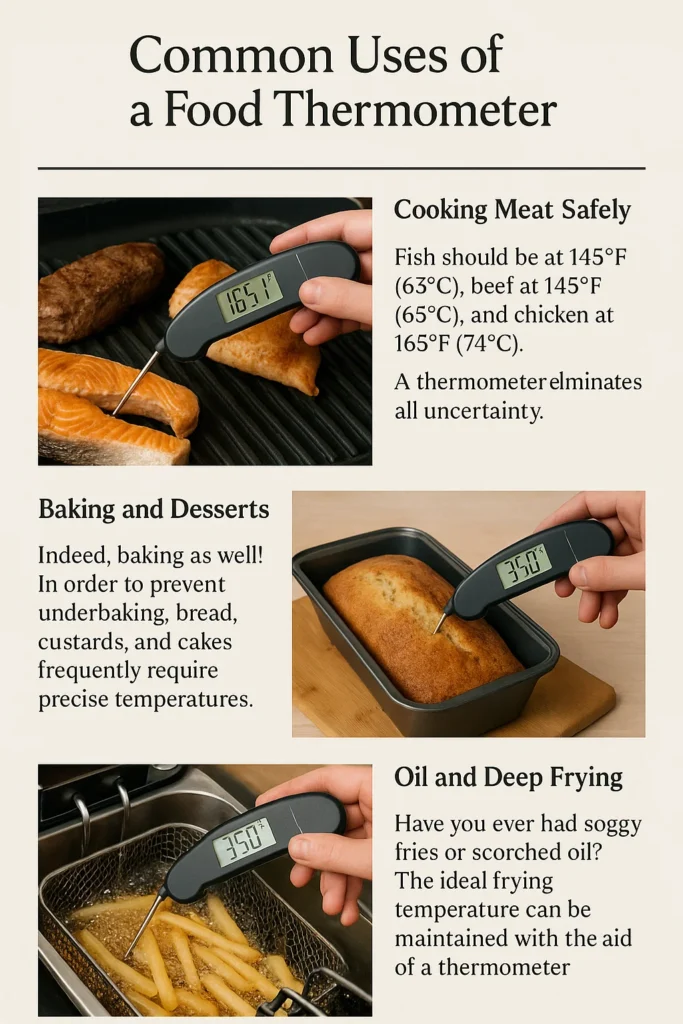
Cooking Meat Safely
Fish should be at 145°F (63°C), beef at 145°F (63°C), and chicken at 165°F (74°C). A thermometer eliminates all uncertainty.
Baking and Desserts
Indeed, baking as well! In order to prevent underbaking, bread, custards, and cakes frequently require precise temperatures.
Oil and Deep Frying
Have you ever had soggy fries or scorched oil? The ideal frying temperature can be maintained with the aid of a thermometer.
Food Safety and Health Benefits
The risk of pathogens like Salmonella and E. coli is decreased by using a food thermometer. Children, the elderly, and anyone with medical concerns should pay particular attention to it. Peace of mind is correlated with safe food.
How to Use a Food Thermometer Correctly
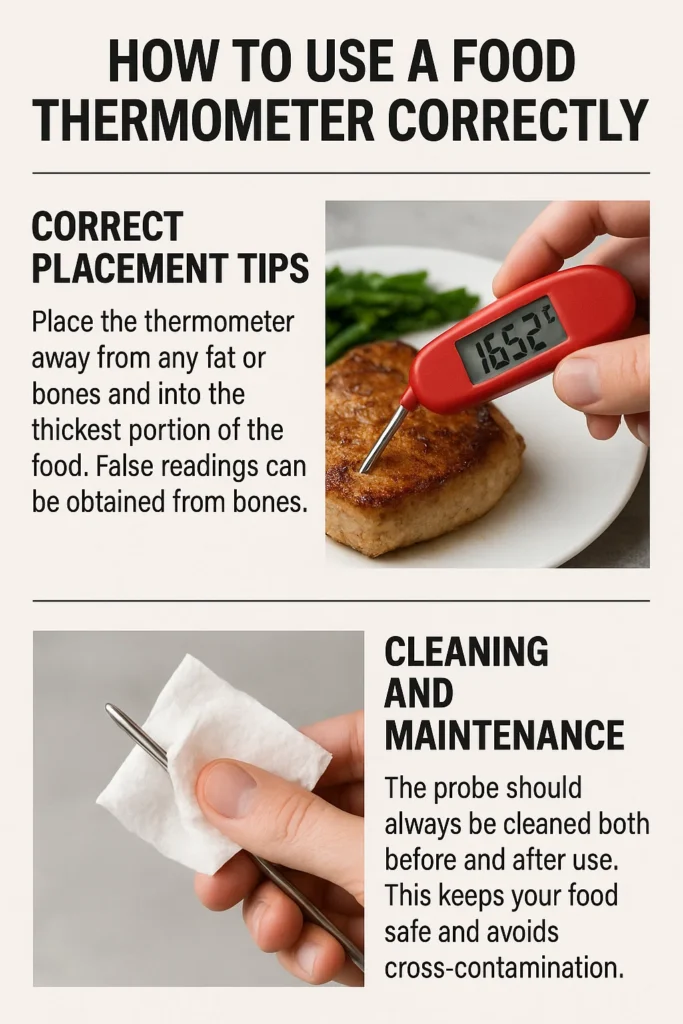
Correct Placement Tips
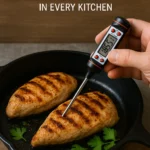
Place the thermometer away from any fat or bones and into the thickest portion of the food. False readings can be obtained from bones.
Cleaning and Maintenance
The probe should always be cleaned both before and after use. This keeps your food safe and avoids cross-contamination.
Best Temperature Guide (Quick Reference)
165°F (74°C) for chicken
Medium beef: 145°F (63°C)
Fish: 63°C (145°F)
Meat on the ground: 160°F (71°C)
Mistakes People Make Without a Food Thermometer
To “check” if the meat is done, most people chop it. This dries the food and releases juices. Others merely depend on cooking time, which varies depending on the pan and stove. All of these errors are eliminated with a thermometer.
Conclusion
Anyone who desires healthier, safer, and more delicious food can use a food thermometer, not only chefs. In my opinion, it’s among the most intelligent kitchen appliances available. You’ll question how you ever cooked without it once you start using it.
FAQs
1. Is a food thermometer really necessary for home cooking?
Yes, it guarantees food safety and consistently excellent cooking outcomes.
2. Can I use one thermometer for all foods?
For the majority of meals, a digital instant-read thermometer is effective.
3. How long does a digital food thermometer last?
It can endure for several years if properly cared for.
4. Can a food thermometer be used for baking?
Yes, particularly when it comes to bread and custards.
5. Is guessing doneness dangerous?
Yes, since undercooked food can lead to illness, especially when it comes to meat.